Culinaria
In "Culinaria", ancient Roman and Greek recipes are transcribed as signs and symbols onto plastic grocery bags, with each piece functioning as both historical document and speculative artifact. Inspired primarily by "De re coquinaria," the cookbook attributed to Roman author Apicius, the series explores food culture, waste, and how future generations might perceive contemporary society. Painted in primary colors on treated white plastic that recalls parchment, the images are structured as lines of pattern, each representing an ingredient. The work proposes a provocative reversal: viewing plastic bags not as disposable refuse but as soon-to-be archaeological items—elevated and scarce materials to be preserved and studied like ceramic artifacts. By placing ancient excess in dialogue with modern habits, the series suggests that what one civilization discards, another may treasure, challenging assumptions about value and permanence while highlighting how patterns of consumption echo across millennia.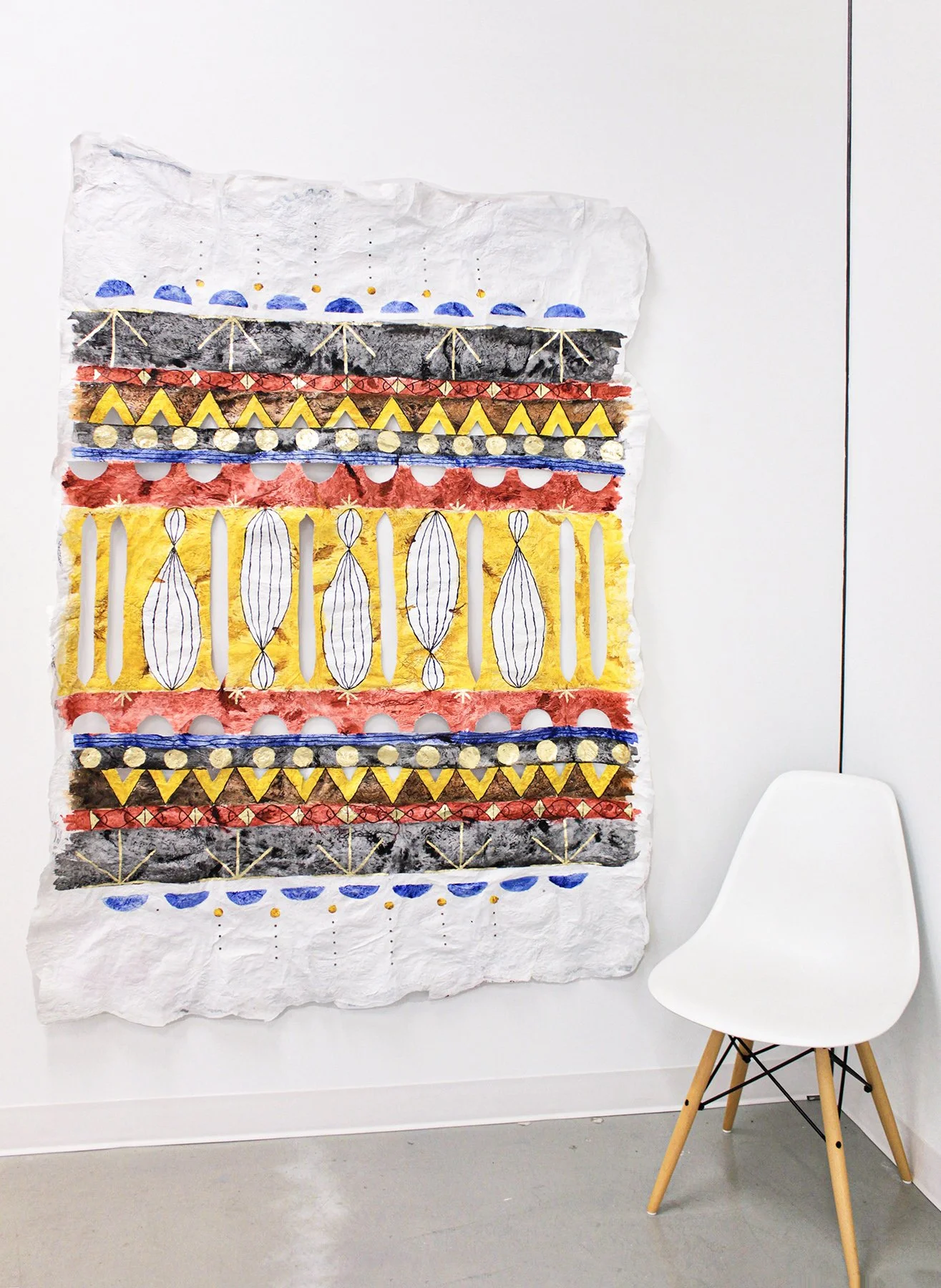
"Patina" - 2024, 70x47in., ink and 24k gold leaf on plastic grocery bags

"Betas" - 2021, 10x8.5in., ink and 24k gold leaf on plastic grocery bags
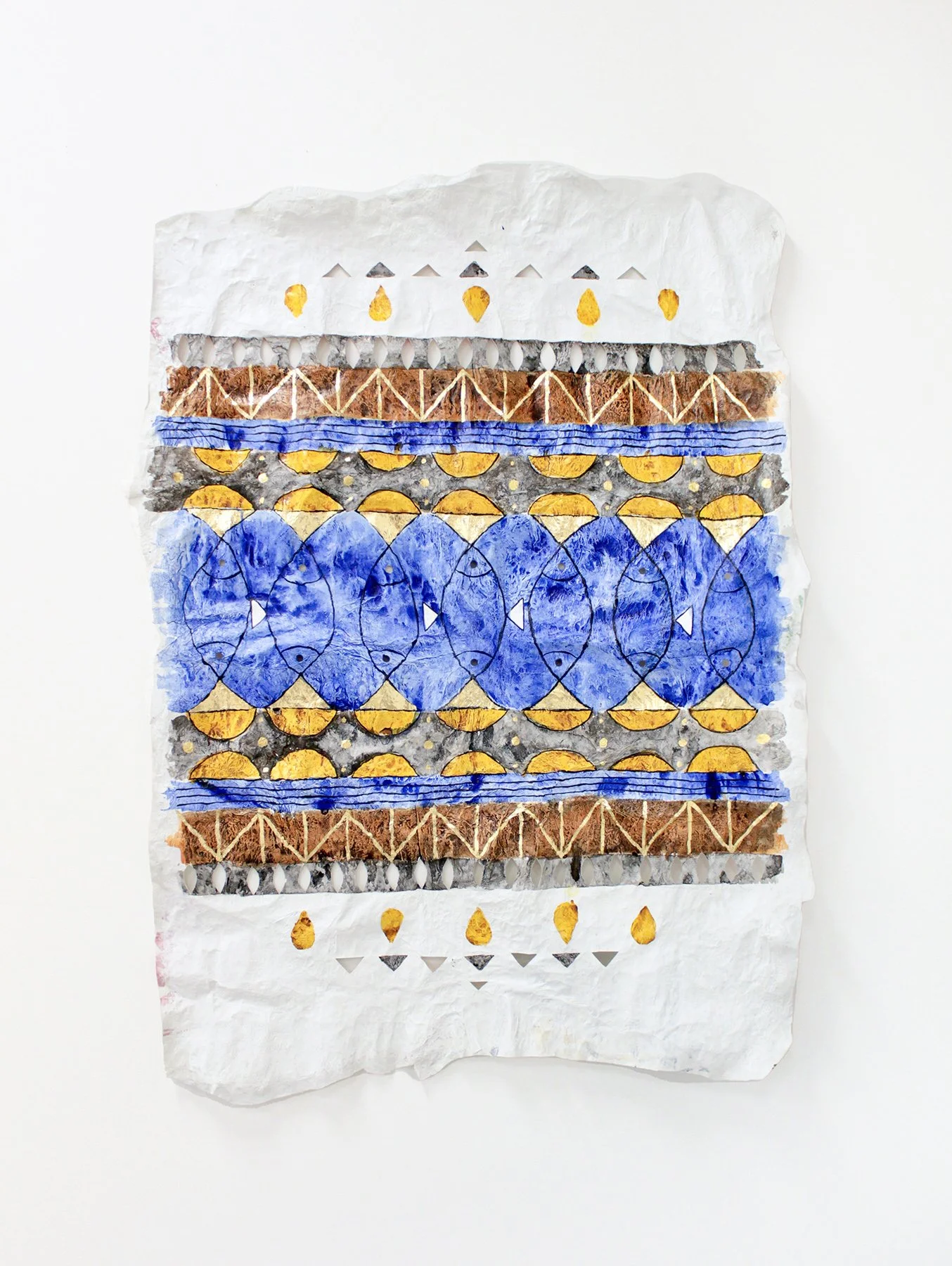
"Minutal" - 2024, 43x32in., ink and 24k gold leaf on plastic grocery bags

"Culinaria" - installation view

"Satureia" - 2023, 42x40in., ink and 24k gold leaf on plastic grocery bags
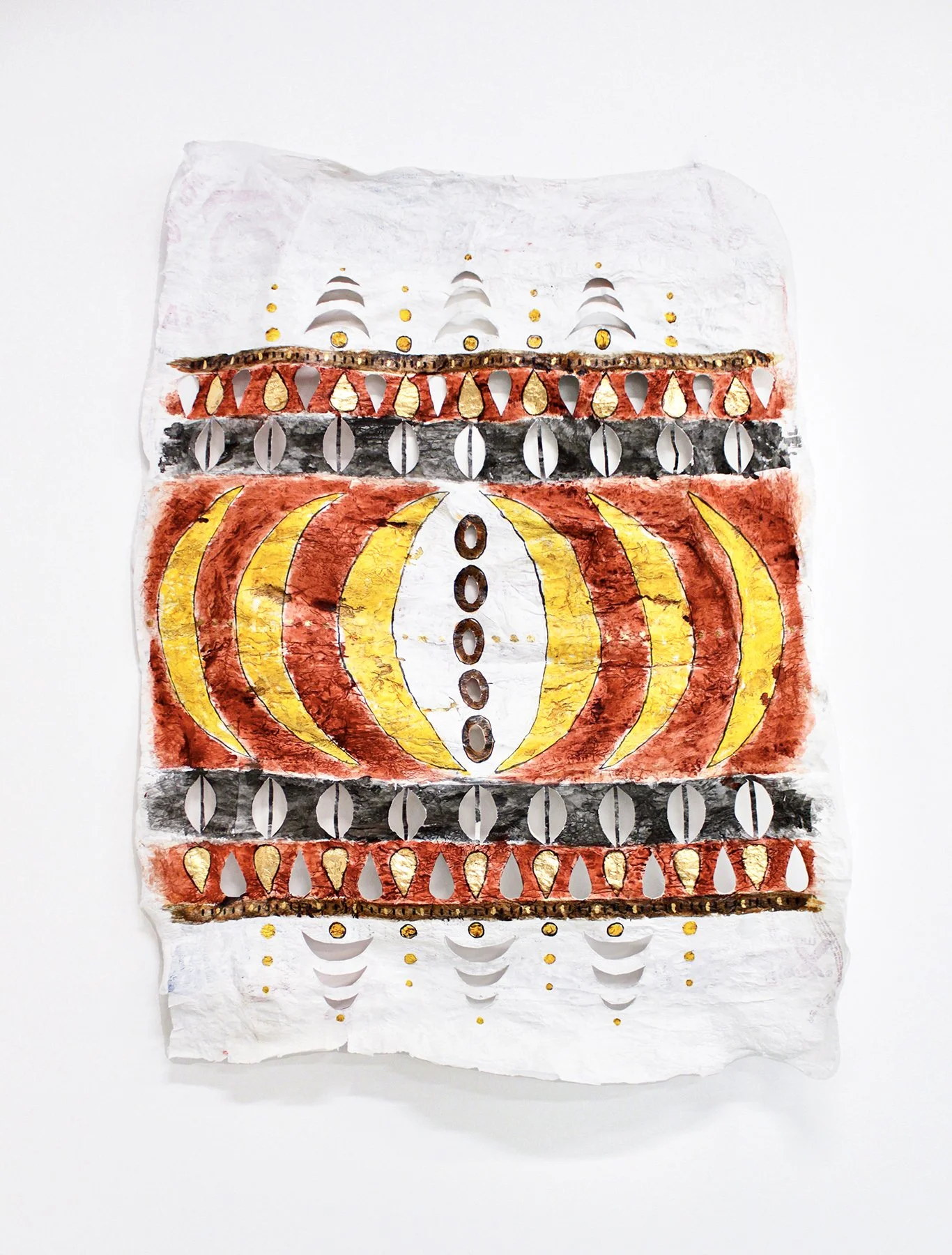
"Cucurbitas I" - 2021, 54x40in., ink and 24k gold leaf on plastic grocery bags

"Cucurbitas II" - 2021, 9x8in., ink and 24k gold leaf on plastic grocery bags
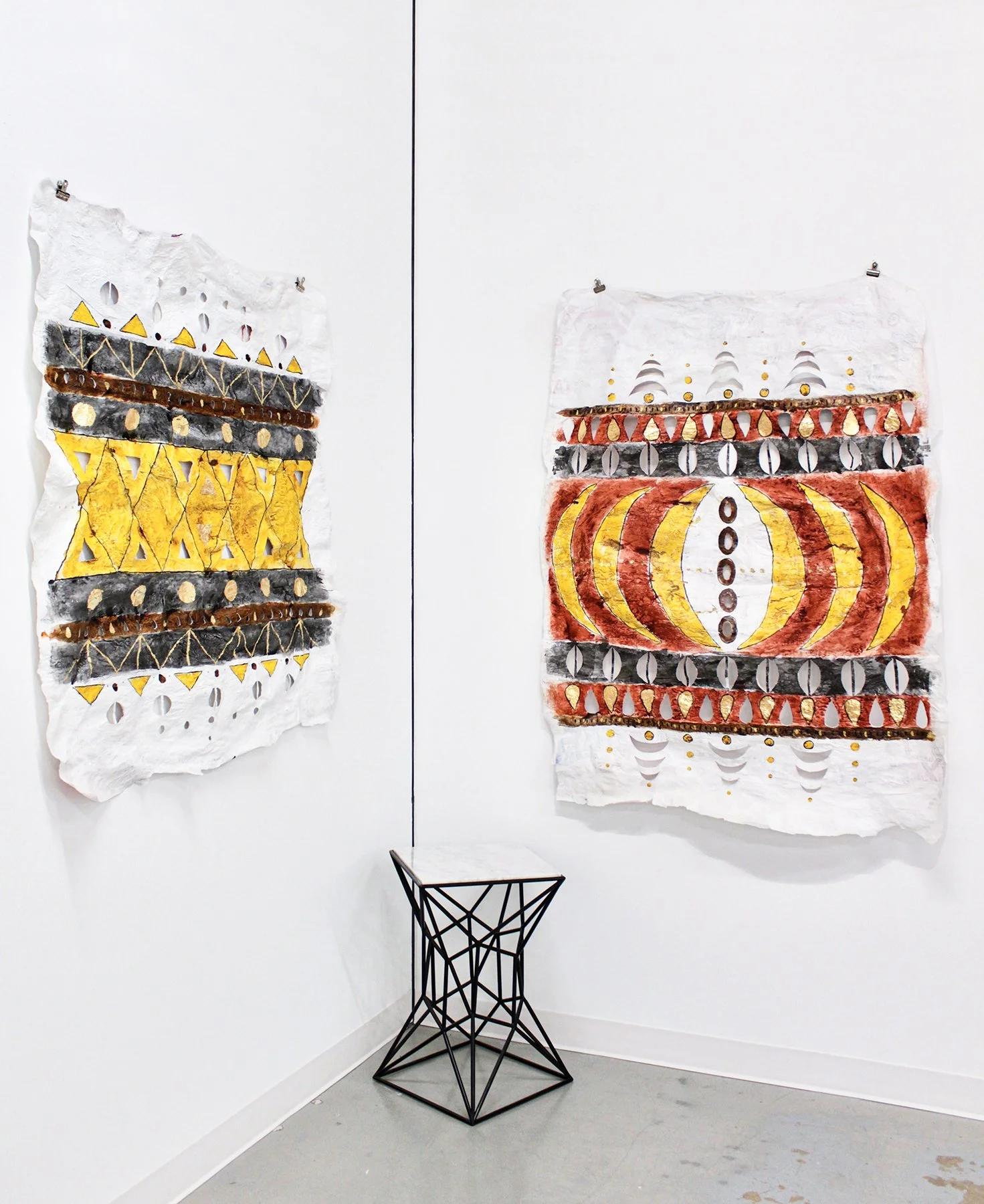
"Culinaria" - installation view
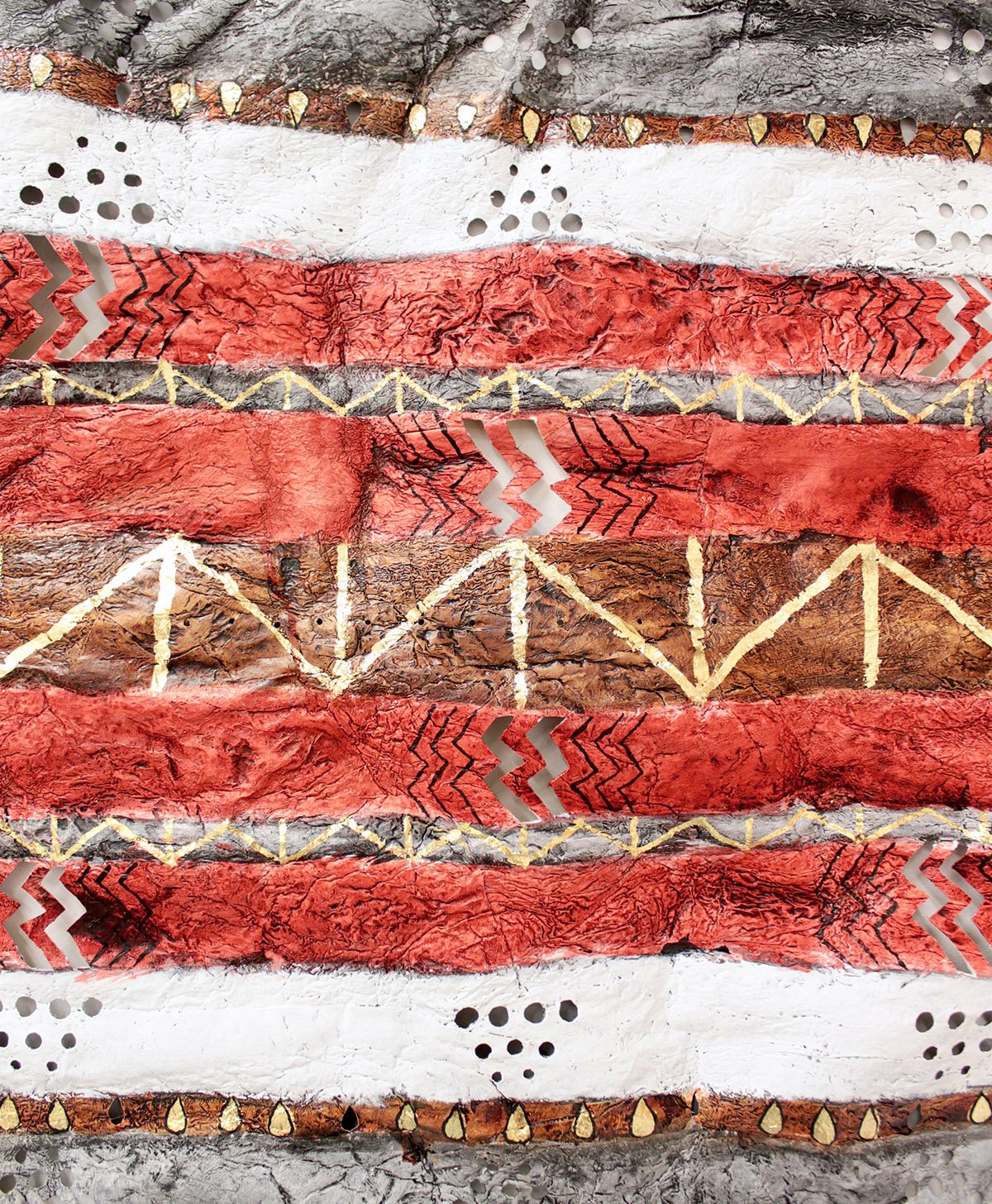
"Anguilla" - 2023, 42x36in., ink and 24k gold leaf on plastic grocery bags